
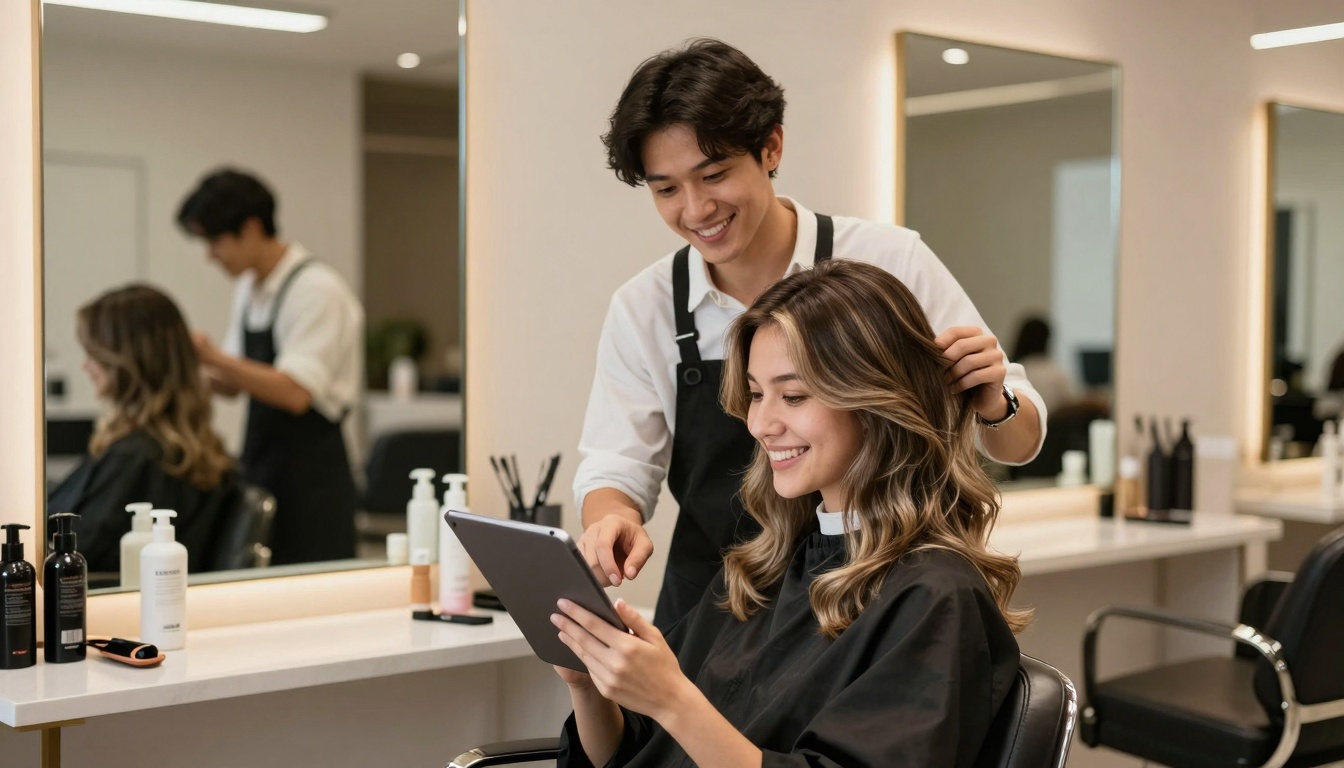


Your hair salon price list is on your salon menu on your site. You’re being a responsible adult. And yet your DMs still look like this:
“Heyyyy how much for highlights???”
No photo. No hair history.
If that’s your life, your pricing page isn’t broken, it’s just missing the part that stops bargain hunters from treating you like a human calculator. The goal isn’t to hide prices. It’s to add the context that makes your target audience feel safe, excited, and ready to book.
This guide is the answer to hair salon pricing page what to write, so your pricing page does what it’s supposed to do: set client expectations, build trust, and attract clients who care about results, not just the lowest number.
Why price shoppers take over (and what they are really asking)
Most people aren’t trying to be annoying. They’re trying to feel in control.
Through their own market research and competitive analysis of salons, when a new client feels unsure, they grab onto the one thing that feels solid: the price. If your pricing strategy on the pricing page doesn’t answer the questions behind the question of price, they’ll ask the fastest thing they can type.
A great pricing page quietly answers three things:
- What will I get? (Outcome, experience, quality)
- Who is this for? (Fit, hair type, goals)
- What will it cost for hair like mine? (Ranges, variables, no surprises)
Price shoppers aren’t always “bad.” Some are just cautious, confused, or tired of being burned. Your job is to give clarity, so only the serious ones keep going.
The 3 reasons people ask “How much?” before they ask anything else
1) They’ve been burned before.
They were told “around $200” and walked out at $420. People don’t trust vague pricing anymore. They want guardrails.
2) Salon terms sound like a foreign language.
Balayage, foilayage, partial, full, mini, money piece. Clients hear those words and think, “Cool, love that for you, but what does it cost?”
3) They’re trying to avoid surprise add-ons.
They’ve seen it: toner wasn’t included, blow-dry cost extra, “extra bowl” fee popped up, and suddenly the service turned into way more than they budgetted for.
When you explain your pricing clearly, you’re not defending your prices. You’re removing fear.
How hiding prices backfires (and what transparent pricing looks like instead)
“DM for pricing” feels like a trap. Even if you mean well, it reads like, “We charge based on how much we think we can get away with.” Ouch.
Transparency doesn’t mean every service needs an exact number for every head of hair on your hair salon price list. Transparency means:
- clear starting prices (“from” pricing)
- clear ranges for common situations
- clear variables such as variable costs (hair length, density) that change the total beyond fixed costs
- a clear promise that you’ll confirm the plan before you start
Do that, and you’ll get fewer price-only messages and more “I think I’m a fit, how do I book?” inquiries.
What to write on your hair salon pricing page (the sections that stop price-only inquiries)
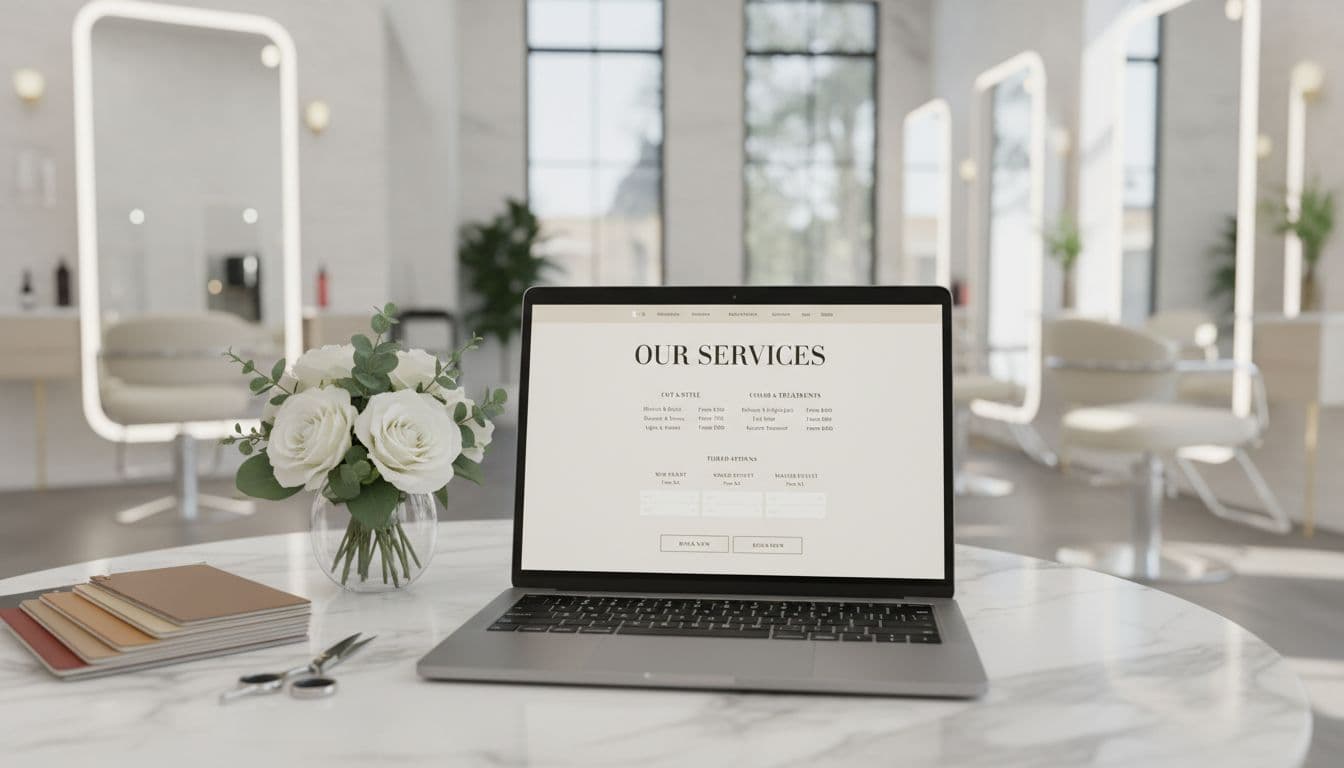
Think of your pricing page like a great consultation. It should calm people down, help them choose, and set the tone for your chair.
Here’s the order that works (and yes, you can copy this structure for your salon menu or hair salon price list):
- Headline + “right fit” statement
- How pricing works (plain language, no drama)
- Service list with “from” prices + outcome-based descriptions
- Tiered options or packages (to guide choices)
- Add-ons (separate, so the base price feels clear)
- What’s included (the value)
- FAQs + policies (reduce awkward money convos)
- Booking buttons (two paths: book now or request a quote)
Start with a value-based headline that says who you are for (and who you are not)
You’re not for everyone, nor should you be. Your pricing page should say that gently, like offering sparkling water instead of tap. This value-based pricing justifies premium rates by focusing on the right clients.
Here are headline options that feel premium without sounding like a snob:
- Custom color for clients who care about hair health and results
- Lived-in blonde, polished brunettes, and zero rushed appointments
- High-end hair services for busy people who want it done right
- Thoughtful cuts and color, with time blocked to actually listen
- For clients who want a plan, not a random guess
Add a one to two-sentence “right fit” statement under the headline. Keep it friendly, a tiny bit firm.
Example copy you can adapt:
“If you love detailed work, honest recommendations, and a calm appointment, you’re in the right place. If you’re looking for the cheapest option in town, I won’t be your best match, and that’s totally okay.”
That one paragraph will save you hours of back-and-forth.
Explain “from pricing” and variables in plain language (so people do not assume bait-and-switch)
People don’t hate “from pricing.” They hate feeling tricked.
Use a short script like this:
“Prices are listed as from because every head of hair is different. Your final total depends on hair length and thickness, your color history, the service time needed, and which stylist level you book with. We’ll confirm your plan and price range during your consultation, before we mix color or start the service.”
Then add a mini checklist that answers the scary part: “What will change the price?”
What can increase your total:
- extra time due to thick or very long hair
- removing dark box dye
- major lightening sessions (hello, years of color build-up)
- adding treatments, hair extensions, or extra styling
What won’t be a surprise:
- we’ll discuss any upgrade before it happens
- if your hair needs a correction, we’ll quote that separately
- no mystery “because I felt like it” charges
That last line is the energy. (You don’t have to write it exactly like that, but the vibe matters.)
Write service descriptions that sell outcomes, not steps
Clients don’t care that you “apply formula to mid-shaft then emulsify.” They care that their hair will look expensive and still feel like hair, especially for hair coloring services like balayage.
Use this template for each service line:
Service Name, from $X
Who it’s for + what’s included + typical maintenance (2 to 3 sentences)
Here are a few filled-in examples of haircut prices and high-ticket services:
Signature Haircut, from $85
For guests who want a shape that grows out well and works with real life. Includes a consultation, shampoo, precision cut, and style. Most clients book every 6 to 10 weeks.
Balayage Refresh, from $220
For lived-in brightness and soft dimension without harsh lines. Includes lightening, toner or gloss, and a finish style. Typical maintenance is 10 to 14 weeks, with a gloss in between.
Gloss and Tone, from $75
For shine, tone correction (brassy to cool, dull to glossy), and that “fresh color” look. Includes a consultation and blow-dry style. Most guests book every 4 to 8 weeks.
Notice what’s happening: clear outcome, clear inclusions, clear upkeep. That’s what stops the “wait, why is it more?” moment.
Use tiered options and packages to guide choices (and raise average ticket)
People like choices, just not 47 of them. Give two to three tiers so they can pick what fits their hair and budget without having to become a salon expert in service categories.
You can do tiers like Essential, Signature, Luxe, or packages like Refresh, Maintain, Transformation.
Here’s a simple tier table you can adapt:
Package | Best for | Starting price:
Essential | A simple refresh and a little polish | From $165
Signature | Our most-booked option, the full appointment experience | From $245
Luxe | Bigger changes with more time and extra care | From $345
One sentence under the table makes it click:
“Not sure which to pick? Choose Signature, we’ll adjust your plan during your consult.”
Keep add-on services separate so the base price feels steady. Add-ons should feel like optional upgrades, not hidden fees.

Add a “What’s included” box that makes your prices feel justified
This is where you remind them they’re paying for more than color in a bowl.
Label it something like “Every appointment includes” and keep it punchy:
- thorough consultation (with a real plan)
- custom sectioning and timing (no speed runs)
- pro products chosen for your hair needs
- styling and finish work (so you leave looking done)
- tips for at-home care (no gatekeeping)
- photo-friendly final check (because you’re going to take pics anyway)
Then add one line that reframes cost in normal language:
“You’re not paying for a single service, you’re paying for the time, skill, and care it takes to get a result you’ll actually love.”
FAQs and policies that reduce sticker shock and attract better-fit clients
A premium pricing page isn’t just pretty. It’s clear. And clear pages with a detailed hair salon price list don’t create comment-section energy in your inbox.
The best pricing page FAQs to pre-qualify clients
Why are prices listed as “from”?
Because hair length, thickness, and past color change the time and product needed. We’ll confirm your range before we begin, matching our hair salon price list.
Do you charge by length or by time?
Most services are time-based with starting prices. More time equals a higher total, and we’ll always discuss it first. Additional color needed due to length and thickness may incur an additional fee.
What if my hair needs color correction?
Corrections are quoted separately after a consult. They often take multiple visits, so we plan it out together.
What is your bridal hair pricing?
Bridal hair pricing starts with a consult for trials and wedding-day details. We tailor it to your vision and timeline.
Do you offer keratin treatments?
Yes, keratin treatments are customized by hair length and condition. Check our salon menu for base pricing, with a consult for your exact quote.
Can you quote me online?
We can give a general range, but accurate quotes usually need photos and a quick consult.
Do you accept new clients?
Yes, when availability allows. Some services may require a first-time consultation booking.
How much should I budget for upkeep?
Most guests plan for a gloss every 4 to 8 weeks, blowout pricing for refreshes every 2 to 4 weeks, and lightening services every 10 to 14 weeks (your plan may vary). These help set client expectations for ongoing care.
What’s your redo policy?
If something feels off, reach out within a set window (example: 7 days). We’ll make it right based on what was agreed during the consult.
Do you have gratuity guidance?
Tips are appreciated but never required. If you choose to tip, many guests do 15 to 25 percent.
Are add-ons required?
No. Add-ons are optional and only recommended if they support your goal.
Policies to include, and how to write them without sounding harsh
Policies can sound like a threat, or they can sound like boundaries from a calm adult. Choose calm adult.
Here are examples you can use as-is:
Deposit
“A deposit is required to book and goes toward your service total.”
Cancellation / reschedule
“We ask for 48 hours notice to cancel or reschedule. Late cancellations may forfeit the deposit.”
No-shows
“No-shows are charged 100 percent of the scheduled service. These fees support profitability and protect gross profit margin for business health.”
Late arrivals
“If you’re more than 10 minutes late, we may need to adjust your service or reschedule so we stay on time for the next guest. This keeps operations smooth and maintains profitability.”
Redo window
“If you have a concern, please contact us within 7 days so we can schedule an adjustment.”
Guests and kids
“To keep the appointment calm and on time, please come solo unless you’ve made arrangements in advance.”
Payments
“We accept card and cash. Prices may change annually, updated rates apply to new bookings after the change date.”
This kind of writing protects your time and makes your experience feel higher-end. Calm rules feel like confidence.
Design and booking flow: turn your pricing page into a client filter
Words do the heavy lifting, but layout is the bouncer at the door.
Unlike a printed price list, a digital price list that converts has:
- clear sections with plenty of breathing room
- “from” prices that are easy to scan
- buttons that show the next step in big, obvious language
- mobile-friendly spacing for your hair salon price list and salon menu (because everyone is reading this in a parking lot)
If you’re on Showit, this is your moment. Showit makes it easy to infuse your salon branding into clean sections, big buttons, and a flow that doesn’t feel like a junk drawer.
If you want a polished starting point, the Glamour Locks Showit salon template is built for beauty pros who want premium vibes without the DIY stress spiral.
Make the next step easy: “Book now” plus “Get a custom quote”
Give two paths, so people don’t panic.
Path 1: Returning clients
They know what they want. Let them book directly through your online booking system.
Button label ideas:
- Book Now
- Schedule Your Appointment
- Book a Refresh
Path 2: New clients (or big changes)
They need guidance. Offer a consult or quote form that integrates with your online booking system.
Button label ideas:
- Request a Consult
- Get a Custom Quote
- New Client Color Consult
Add 3 to 5 form questions that qualify the client without making it feel like an interrogation:
- “What’s your hair history (box dye, highlights, corrections)?”
- “What’s your goal, and when do you want it done?”
- “Upload 1 to 3 inspiration photos and your current hair.”
- “What’s your budget range for this appointment?”
- “What days and times work best for you?”
That budget question is not rude. It’s respectful. It aligns clients with your tiered pricing and saves everyone time.
Quick upgrades that make your prices feel premium at a glance
Small tweaks change the whole vibe:
- use consistent names (don’t call it “Gloss” in one spot and “Toner” in another)
- remove decimals (most people don’t need to see $85.00)
- use “from” consistently (don’t mix “starting at” and “approx” everywhere)
- group services (Cuts, Color, Treatments, Hair Extensions)
- highlight your most-booked option (people love being told what’s normal)
- add a little proof near pricing (one review, one result photo, one credential)
- update pricing regularly and note when new pricing starts
Your hair salon price list should feel like your chair: clean, calm, and intentional.
Conclusion
If your inbox is full of “how much?” messages, your prices aren’t the problem. The missing piece is the context that makes the right target audience feel confident and makes the wrong people move along. This value-based pricing boosts profitability by focusing on high-ticket services.
Keep your prices visible, add clear “from” ranges, explain the variables, and spell out what’s included for hair coloring services, haircut prices, and hair extensions. Cover hair coloring services and haircut prices in detail, then add FAQs and policies that set expectations before anyone gets spicy. A smart pricing strategy like this enhances profitability through transparent pricing.
To wrap up key elements, prioritize hair coloring services (with clear pricing), haircut prices (structured by length and style), and hair extensions (noting installation methods).
Audit your pricing page using the sections above, including service categories and service descriptions in your hair salon price list, salon menu, digital price list, or printed price list. If you want the fast version, Website in a Day is built for beauty pros who need a premium Showit site (and a pricing page that filters out price-only inquiries) without dragging it out for months. Your time is expensive, and your website should act like it.


My Website in a Day service is perfect for beauty pros who need a polished, professional online presence—like, yesterday. We’ll take one of my custom-designed Showit templates and tailor it to your brand, style, and services in just one day. You’ll walk away with a site that books clients, builds trust, and looks like a million bucks (without taking forever to launch).


